A roll-off is not the only way to get rid of debris in Fort Lauderdale. The city collects bulk trash, junk removal crews will load a truck for you, and some companies sell large debris bags. Each has its place. This page compares them honestly, explains when roll off dumpster rental in Fort Lauderdale is the better choice, and covers how roll-offs work on job sites.
Dumpsters Fort Lauderdale is an independent referral service, not a dumpster company. When you call or send the form, your request goes to an independent local roll-off provider that quotes the rental, delivers the container and hauls it away.

What makes a roll-off a roll-off
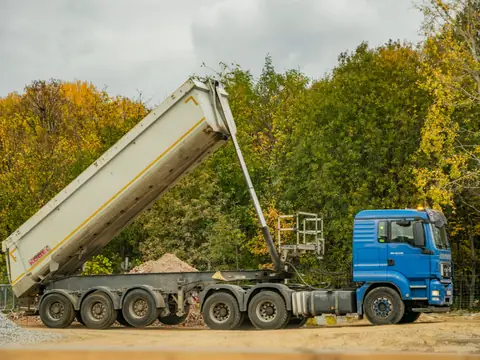
The name comes from the delivery. A truck with a tilting bed and a winch carries the open steel container, tilts the bed and lets the container roll off onto the ground on its rails. At pickup the winch pulls it back up. Because the container stays on site, you can fill it at your own pace over the rental period, and because it is open-topped with a door at one end, you can walk heavy items in or toss debris over the side.
Option 1: the city’s bulk pickup
Fort Lauderdale homes on city sanitation service get bulk trash collected once a month on the scheduled service day. The pile goes to the curb by 7 a.m. on pickup day and no earlier than 24 hours before, and it can be no larger than 10 cubic yards. The city does not take dirt, sod, sand, pavers, concrete or tiles in bulk, nor household garbage, hazardous materials or items from another property.
- Good for: a sofa, a mattress, a few boxes, a hedge trim.
- Not for: remodel debris with tile or concrete, anything over the size limit, anything that cannot wait for the monthly day.
Option 2: junk removal
A crew arrives with a truck, carries your items out and drives away. You do no lifting, and the job is done in one visit. It suits a handful of heavy or awkward items, or someone who cannot load a container. For a long cleanout, a remodel or debris that keeps coming over days, a container that stays on site is usually more practical.
Option 3: debris bags
Some companies sell large fabric bags that you fill and they collect. They take little space and can sit where a container cannot. They suit very small jobs. Rules on weight and contents vary by company, so ask before you fill one with tile or dirt.
Option 4: a roll-off container
- Good for: whole-house cleanouts, remodels, roofs, construction, storm and yard cleanups, heavy debris in a small container.
- Things to plan: a spot the truck can reach, the rental period, the weight allowance and the items that are refused.
Side by side
| City bulk pickup | Junk removal | Debris bag | Roll-off | |
|---|---|---|---|---|
| Who loads it | You, to the curb | The crew | You | You |
| How much | Up to 10 cubic yards | Truckloads | One bag | 10 to 40 yard containers |
| Heavy debris | Not taken | Ask | Ask | Yes, sized for weight |
| Timing | Monthly | One visit | When collected | Your rental period |
| Cost | Included with city service | Quoted by the company | Quoted by the company | Quoted by the provider |

Roll-offs on job sites
On a construction or demolition site, roll-offs are part of the schedule. A typical pattern is a 30 or 40 yard container for bulky mixed debris, swapped as it fills, plus a small container for clean concrete, block or brick. Roofing crews use 20 or 30 yard containers placed as close to the house as the truck allows.
- Plan the spot. Leave a clear path for the truck and room for the bed to tilt.
- Plan the swaps. Agree who calls for a swap and how much notice the provider needs.
- Keep heavy debris apart. It protects the larger container’s weight allowance.
- Check the right-of-way. On the street, sidewalk, swale or alley, the City of Fort Lauderdale’s Engineering Permitting Division handles right-of-way permits, and a revocable license agreement is needed when work occupies or closes city right-of-way for more than 72 consecutive hours.
- Check the property type. In Fort Lauderdale, commercial and multi-family properties must contract with a hauler that is authorized to operate in the city.
The construction debris guide goes deeper into phases and swaps.
What still stays out
A roll-off takes a lot, but not everything. Florida keeps lead-acid batteries, used oil, white goods and whole waste tires out of landfills, and yard trash out of Class I landfills, so ask about appliances and keep batteries, oil, tires, paint and chemicals out of the container.
Mixing options
Many projects mix them. Put a couch out for bulk pickup, rent a small roll-off for the bathroom tile, and the container stays small.
Choosing in thirty seconds
- Under 10 cubic yards, no heavy debris, can wait for the monthly day: city bulk pickup.
- A few heavy items and you cannot lift: junk removal.
- A tiny job with a tight spot: a debris bag.
- Anything bigger, heavier or on a deadline: a roll-off.
If a roll-off is the answer, see how a Fort Lauderdale dumpster rental works and the size chart.
What a roll-off looks like on delivery day
The container arrives empty on the back of the truck. The driver lines up with the spot, raises the bed and lets the container roll down onto the ground, then drives away. The container has a door at one end that swings open, so you can walk in heavy or awkward items rather than lifting them over the side. Close and latch it when you are not loading.
Loading a roll-off well
- Lay doors, panels and drywall flat on the floor first.
- Walk heavy items in through the door rather than throwing them over the side.
- Break down furniture and flatten boxes.
- Fill the gaps with smaller debris.
- Spread the weight from end to end.
- Stop below the top edge.
When a roll-off is the wrong tool
A roll-off is not always the answer. If the debris fits in a 10 cubic yard pile with nothing heavy in it and you can wait for the monthly city pickup, the bulk program is the natural choice. If there is no spot the truck can reach and the street is not allowed, junk removal or debris bags may be the only practical options. And if what you have is mostly hazardous material, such as paint, chemicals or oil, a container is not the place for it at all.
Roll-offs for homeowners, not just builders
Roll-offs are often seen on construction sites, but homeowners use them just as much: for a whole-house cleanout before a move, a kitchen or bathroom remodel, a new roof or a big yard clearing. The process is the same, just smaller. For home projects in particular, see residential dumpster rental and dumpsters in Fort Lauderdale neighborhoods for placement on different kinds of streets.
Questions to ask about a roll-off
- Which size do you suggest for my debris?
- How many days are included, and what does an extra day cost?
- What weight is included?
- Does the container have a door at one end?
- How do I book a swap or the pickup?
Roll-offs and the city’s rules
A roll-off on private property is between you and the provider, plus any association rules. A roll-off on the street, sidewalk, swale or alley is on city right-of-way, which the City of Fort Lauderdale’s Engineering Permitting Division handles; see the permit guide. Bulk pickup, by contrast, has its own timing and size rules set by the city’s sanitation service. Knowing which rules apply to which option is half the decision.
Whichever option you choose, decide before the debris starts piling up. It is much easier to plan the container than to move a pile twice.
Decided on a roll-off? Call or send the form for a size and a quote.
Questions people ask
What is a roll-off dumpster?
An open steel container that a truck with a tilting bed rolls off onto your driveway or site and later winches back up to haul away.
Is city bulk pickup free in Fort Lauderdale?
It comes with city sanitation service, once a month, in a pile up to 10 cubic yards, without dirt, sod, sand, pavers, concrete or tiles.
When is a roll-off better than junk removal?
When debris keeps coming over several days, when there is a lot of it, or when it is remodel or construction debris.
Can a roll-off sit on the street?
The street is city right-of-way. In Fort Lauderdale, ask the Engineering Permitting Division before a container goes there.
Do roll-offs have a door?
Many do, at one end, so heavy items can be walked in. Ask the provider about the container it brings.
Before the truck comes
- Pick a flat, firm spot the truck can reach
- Keep the drop zone clear of cars, wires and branches
- Ask the city before anything goes on the street or swale
- Keep paint, tires, batteries and oil out
- Say the job and the debris when you ask for a size