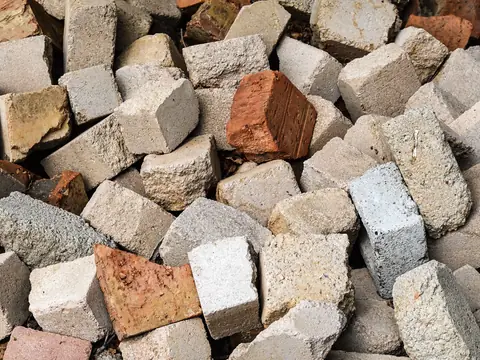
Concrete, tile, pavers, block and dirt behave differently from other debris. They are dense, so a container fills up by weight long before it fills up by space. A concrete dumpster is simply a roll-off rented and loaded with that in mind, and getting it right is the difference between one haul and two.
Dumpsters Fort Lauderdale is an independent referral service, not a dumpster company. When you call or send the form, your request goes to an independent local roll-off provider that quotes the rental, delivers the container and hauls it away.

Why heavy debris needs a smaller container
Every container has a weight allowance set by the provider, and the trucks that carry them have road limits. A large container full of concrete could weigh far more than anyone can legally haul. That is why providers usually rent heavy debris in their smaller sizes, often a 10 yard, and may ask you to fill it only part way. The exact limits vary, so ask.
- Tell the provider what the material is: concrete, tile, pavers, block, brick, dirt or sod.
- Say roughly how much: square feet of patio, rooms of tile, cubic yards of dirt.
- Ask about the fill line for heavy loads and the charge if the weight goes over.
What a clean load means
A clean load is one material with nothing else mixed in: only concrete, or only dirt. Clean heavy loads can often go to recyclers and crushers rather than a landfill, and providers may handle them differently from mixed debris. Mixing in wood, trash or yard waste usually turns it back into ordinary mixed debris.
| Material | Typical source | Tip |
|---|---|---|
| Concrete and block | Patios, slabs, walls | Keep rebar-heavy pieces to a minimum or ask |
| Tile and grout | Floors, showers, backsplashes | A remodel can produce more than it seems |
| Pavers and brick | Driveways, pool decks | Stack them flat to use the space |
| Dirt and sod | Landscaping, pool digs | Very heavy when wet; ask about limits |

Why not the city’s bulk pickup?
Fort Lauderdale’s bulk trash program does not accept dirt, sod, sand, pavers, concrete or tiles. So even a modest bathroom tile job or a small patio tear-out needs another route, and a small roll-off is the usual answer.
Placement matters more when it is heavy
A loaded concrete container is heavy enough to crack thin pavers or mark asphalt. Put it on a solid concrete driveway where possible, ask about boards under the rails, and keep it away from seawalls, septic tanks and drain fields. The street or swale is city right-of-way and needs the city’s approval first.
Load it evenly
Spread heavy debris across the floor of the container rather than piling it at one end. It is safer to lift and easier to haul.
Planning a tear-out
Before the hammer drill comes out, think about the order of work. Remove anything that is not concrete or tile first, such as fixtures, trim and wood, and put it in a separate load so the heavy container stays clean. Break slabs into pieces you can lift safely and lay them flat in the container rather than dropping them from height, which can damage the floor of the container and shift the load.
Dirt and sod
Dirt and sod are the heaviest loads of all when they are wet, and South Florida soil is often wet. If a landscaping or pool project is producing them, ask for a container sized for the weight, keep rock, roots and trash out so the load stays clean, and try to load it on a dry day. A tarp over the container between loading sessions keeps rain out and the weight down.
For the other kinds of containers and the jobs they suit, see dumpsters for Fort Lauderdale projects.
Tearing out a patio or a tile floor? Call or send the form and say how much there is.
For a whole remodel, see residential dumpster rental or, for contractors, construction debris.
Questions people ask
What size dumpster do I need for concrete?
Usually a small one, often a 10 yard, because concrete reaches the weight allowance before it fills the space. The provider sets the limits.
Can I mix concrete with other debris?
Ask first. A clean load of one material can often be handled differently from mixed debris.
Does Fort Lauderdale bulk pickup take concrete or tile?
No. The city’s bulk program does not accept dirt, sod, sand, pavers, concrete or tiles.
Can I put dirt and concrete in the same container?
Ask the provider. Some take mixed heavy debris in one load; others want each material separate so it can go to the right place.
Why does the provider ask how many square feet?
It is a quick way to estimate the weight of a patio, a slab or a tile floor, which decides the size of the container.
Before the truck comes
- Pick a flat, firm spot the truck can reach
- Keep the drop zone clear of cars, wires and branches
- Ask the city before anything goes on the street or swale
- Keep paint, tires, batteries and oil out
- Say the job and the debris when you ask for a size